Optimizing Flow Wrap Machine Speeds Without Sacrificing Hermetic Seal Integrity
A deep-dive engineering guide on how multi-axis servo synchronization, PID temperature control, and web tension dynamics ensure zero-leak seals at 150+ packs per minute.
In high-volume consumer packaging, balancing line throughput with seal security is one of the most critical operational challenges. When packaging speeds increase, the dwell time—the duration the sealing jaws remain in contact with the film—naturally decreases.
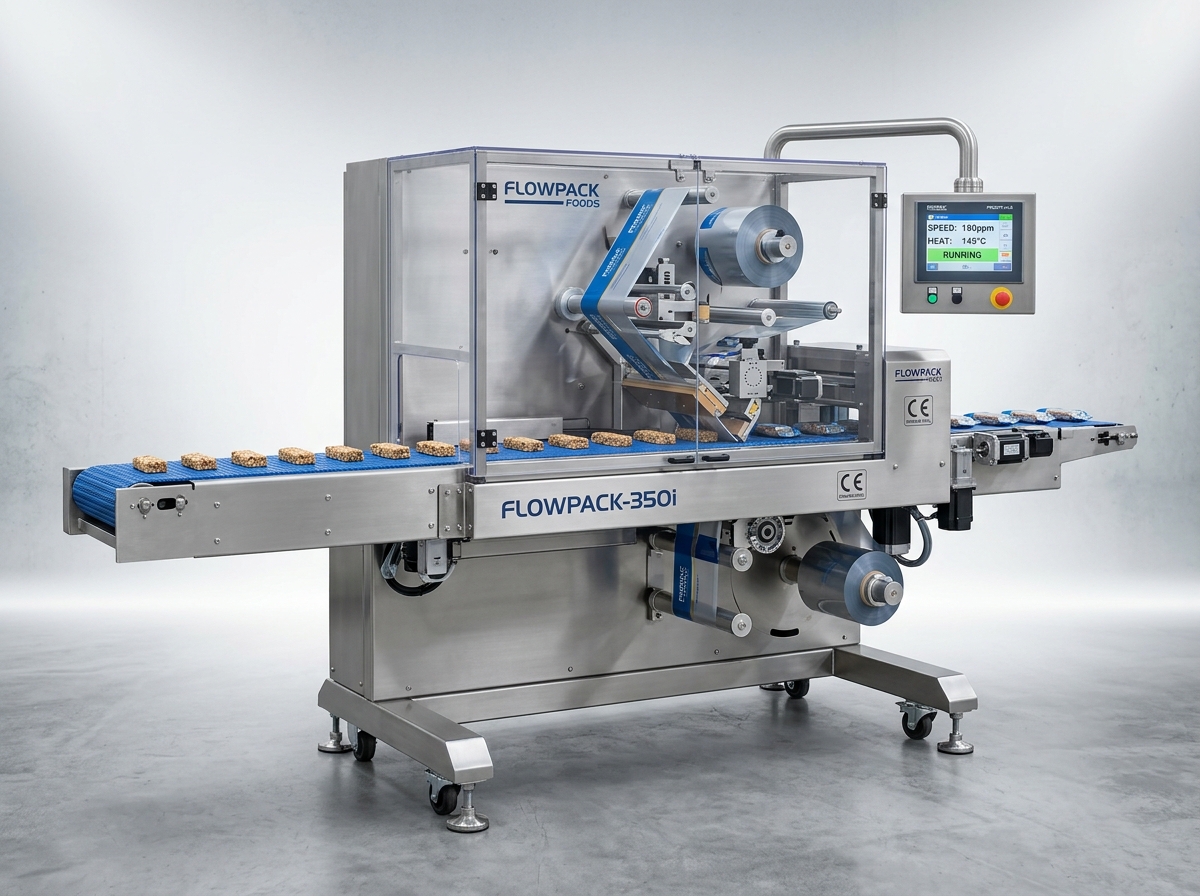
To overcome dwell time limitations, modern servo-driven flow wrappers like the DE-450DAN utilize motion profiling that decelerates the rotary jaws specifically during the seal contact zone before accelerating through the rest of the cycle. This allows extended contact time without lowering overall line velocity.
Key considerations for zero-leak sealing include: 1) Precision PID temperature management across top and bottom heating elements; 2) Constant web tension feed to prevent film necking; 3) Accurate eye-mark registration to keep print graphics centered; and 4) Proper jaw serration matching the chosen film gauge (BOPP, laminated PE, or metalized films).
By implementing servo-driven crimping and anti-jam sensors, production facilities can expect a 99.8% first-pass seal integrity rate while cutting raw film wastage by up to 14%.
Furthermore, operators must establish a consistent line speed that synchronizes seamlessly with the feeding systems to prevent bottlenecks. Modern machinery utilizes advanced PLC frameworks to automatically recalibrate feeding intervals when upstream supply fluctuates. This proactive approach not only minimizes rejected packs but also significantly reduces the wear and tear on sealing components.
Another critical factor in long-term operational success is the quality of the packaging film itself. Multi-layered films offer superior barrier properties against moisture and oxygen, extending the product's shelf life. However, these films necessitate precise temperature tuning on the sealing jaws. Even a slight deviation of a few degrees can result in a weak seal that compromises the product's integrity during transit.
Looking ahead, the integration of IoT sensors within the packaging line provides real-time analytics and predictive maintenance alerts. By analyzing historical performance data, factory managers can preemptively schedule maintenance for high-wear parts like cutting knives and heating elements, thereby avoiding costly unplanned downtime and maintaining optimal overall equipment effectiveness (OEE).
Ultimately, achieving maximum efficiency requires a holistic approach that balances mechanical precision, material quality, and proactive maintenance. Investing in state-of-the-art packaging technology and training operators to fully leverage these capabilities is the most reliable pathway to sustainable profitability in the highly competitive food packaging industry.

Pravin Joshi
Chief Applications Engineer